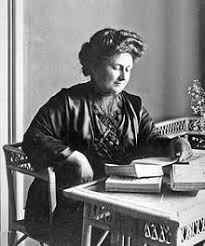
Dr. Maria Montessori, one of Italy’s first female medical doctors, was assigned to an Orthophrenic school for children with developmental disabilities in 1896. As a trained medical doctor – not an educator – Dr. Montessori implemented the scientific method of hypothesis, observation, analysis, and conclusion in her service to the children at the Orthophrenic School. Drawing upon the research, tools, and discoveries of her peers and predecessors in special education, she introduced scientifically designed materials to the students and measured their effectiveness. By the end of her short tenure at the Orthophrenic School in Rome, Montessori’s students tested at or above the national average for academic achievement.

These early successes caused Dr. Montessori to wonder what affects these didactic materials might have when implemented and studied in “normal” schools. She accepted a position with a housing development in San Lorenzo, Italy to develop a program to occupy unsupervised, unruly children while their parents worked. Here again, in the first Montessori School, she discovered the success of the hands-on, auto-didactic materials to engage the children in meaningful work that served to assist them physically, academically, and socially.
As the Montessori Method spread throughout the world during the 20th century, Montessori ceaselessly continued to develop her unique method of education to address the unique needs of children of all ages. Simultaneously, advances in neuroscientific research have confirmed that the nine principles of Montessori education, as she laid out in her book The Montessori Method, do best foster the developing human brain throughout its development. These nine principles are:
- Movement and cognition have a symbiotic relationship
- Learning and well-being improve when given manageable freedom of choice
- Attention to a singular task leads to deep concentration
- People learn best when interested in a particular topic or task
- Intrinsic rewards have a higher motivational value than extrinsic rewards
- Collaborative learning arrangements benefit all parties
- Learning happens best within a meaningful context
- The relationship between the teacher and the child is paramount to success
- Students thrive in orderly environments
With these principles as a foundation, Heartwood Montessori ambitiously aims to support children in becoming complete adults – comfortable with themselves, with their community, and with humanity as a whole. Montessori teachers guide each child within the framework of thoughtfully prepared learning environments. The Montessori approach, classrooms, and learning materials cultivate in children their natural desire and self-discipline to learn.
Montessori teachers are not only knowledgeable about childhood development; they are also skilled observers and creative facilitators. Teachers closely observe each child’s interests, learning style, and temperament. They guide students toward materials and lessons that will capture the student’s attention. They offer encouragement, share in triumphs, and steer children toward greater understanding.
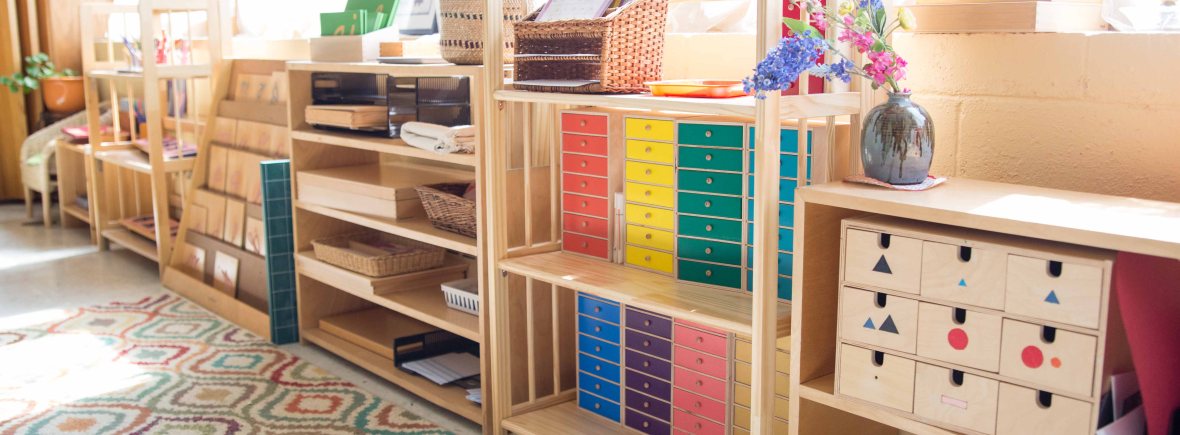
Heartwood’s classrooms are designed to create a learning environment that accommodates choice. Some spaces are better suited to group activity, while other areas encourage solitude. Each part of the curriculum has a dedicated area with shelves or display tables containing a variety of inviting materials from which students can choose. All learning materials are carefully selected and have been proven effective in supporting mental and social development, and Heartwood’s approach guides students to a respect and love for themselves, for others, and for the world around them.
Resources
Our community is always growing and learning. We have provided a list of Montessori resources that will help you, your family, and your child on the journey to self-discovery.
VIDEOS/SPEECHES
1. A Peek Inside a Montessori Classroom (2:41)
2. Trevor Eissler “Montessori Madness” (5:44)
3. Looking to Montessori to Guide Education Reform | Anna Lee at TEDxMidAtlantic (13:44)
4. Building Better Brains: The Neurological Case for Montessori Education | Dr. Steve Hughes (1:35:27)
BOOKS
1. Montessori Madness by Trevor Eissler
2. Montessori: The Science Behind the Genius by Angeline Stoll Lillard
3. The Absorbent Mind by Maria Montessori
4. Understanding Montessori by Maren Schmidt
WEBSITES
1. Minnesota Montessori Network: http://mnmn.org/
2. American Montessori Society: http://www.amshq.org/
3. Montessori Guide: http://montessoriguide.org/
4. Association Montessori USA: http://amiusa.org/
Like our Facebook page where we continue to share insightful articles, links, videos, photos, and resources.
 heartwoodmontessori.org